
"cultural export"
4000 article(s) found

A brief introduction to the History and Culture of the Origin and Development of High quality Arabica Coffee beans in Honduras
Personally, I think it's hard to say whether coffee is good or bad, some people like sour ones, others like bitter ones, African beans, Asian beans, American beans, sea beans, island beans have their own personalities, and the ability of baking determines whether they can give full play to the characteristics of beans. Honduras is a big coffee grower in Central America. 15 of the country's 18 provinces have coffee plantations, and more than 100000 coffee growers have created nearly one million for the country.

How to brew Colombian Coffee Culture Colombian Coffee characteristics
Professional coffee knowledge exchange more coffee bean information please follow Coffee Workshop (Wechat official account cafe_style) Colombia is one of the world's top coffee exporters, shipping millions of bags of the best coffee beans abroad every year. But why is the world so in love with Colombian coffee? Colombia is a very prolific coffee exporter, second only to global industry.

History and culture of coffee in El Salvador
A brief History of Coffee production in 1742, coffee was introduced to El Salvador from the Caribbean (1740). In the mid-19th century, El Salvador's original export pillar Indigo (one of the dyes) received a gradual decline in the development of synthetic dyes in Europe, and coffee gradually became the main export product under the guidance of the government. In 1856, the first 693 bags of coffee beans were shipped to Europe. all long
Ethiopia's admirable coffee country
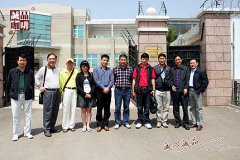
In the world of coffee, there are countless stories and reports about Ethiopia: the birthplace of coffee, the story of shepherds, the thought-provoking documentary Black Gold, and so on. None of the above is an important reason for our visit. This time, we of Guangzhou Coffee Association (Lin Guangchao, Vice President Lin Yaohui, Vice President Xiao Fei, Vice President Tang Jinqing and Mr. Liang Rengming) are in Ethiopia.

The origin of coffee culture in El Salvador
El Salvador, located in the northwest of Central America and bordered by the Pacific Ocean to the south, is one of the birthplaces of the ancient Mayan civilization. The nearby volcanoes, plateaus, lakes and bathing beaches along the Pacific coast are all very pleasant. But El Salvador is most famous for its unique, mild-flavored coffee. El Salvador is one of the small countries in Central America with a very dense population. this

General knowledge of Coffee Culture the Development History of Colombian Coffee
Coffee was first introduced to Colombia in 1808 when it was brought by a priest from the French Antilles via Venezuela. Today, the country is the second largest producer after Brazil, with an annual output of 13 million bags of 60 kg each, while Brazil produces 22 million bags a year. The status of coffee in Colombia can be seen in the following examples-all entering the
Coffee culture Coffee spread track in the world
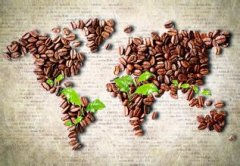
Coffee was introduced into Europe Islam prohibited drinking alcohol, but also from the side to promote people to drink a lot of coffee, in the 16th century, coffee in the name of Arabic wine attracted the attention of European countries. However, Arab countries are very strict with the export of coffee, and even require raw beans to be boiled before they can be exported. However, with the continuous development and frequency of trade, coffee in Europe in the mid-17th century.

Introduction to the Culture of Coffee producing areas in El Salvador
El Salvador, located in the northwest of Central America and bordered by the Pacific Ocean to the south, is one of the birthplaces of the ancient Mayan civilization. The nearby volcanoes, plateaus, lakes and bathing beaches along the Pacific coast are all very pleasant. But El Salvador is most famous for its unique, mild-flavored coffee. El Salvador is one of the small countries in Central America with a very dense population. this

Introduction to the characteristics of birdy brand taste and flavor description method in Vietnam coffee bean producing area
There have been traces of human activities in Vietnam in ancient times. Ape-man teeth were found in Pingjia, Lang Shan Province, and Paleolithic tools were found in Dushan, Qinghua Province. To the Middle Stone Age and Neolithic Age, several cultural sites appeared in the northern region, such as the culture of peace (in the province of Peace) and Beishan culture (in Beishan, Lang Shan Province). At that time, the ancestors used stone tools, bamboo and wood.
Introduction to Brazilian Coffee, Introduction to Brazilian Coffee Plantations
Brazil is one of the world's largest coffee exporters and consumers, and Brazilian coffee culture, like Chinese tea culture, has become a tradition that embodies respect, respect and sincerity. Brazil, as the world's largest coffee producer, produces coffee with mild flavor, slightly sour and slightly bitter, which is the best representative of taste life. Brazilian coffee is fragrant and has been around the world

A brief introduction to the Origin, Development, History and Culture of Fine Coffee beans in Tanzania
Product features: smell: flower scent, clean and delicate lemon fragrance. Clean, full, it is mild and does not stimulate the smell after extraction: a variety of floral flavors: bright acidity, mellow taste, and thanks to the rich volcanic soil, it has the sweetness of mineral water, because we use medium baking techniques to make it smooth and elegant with acidity. The whole is softer than Ethiopia.

Consistent Angola Fine Coffee Bean Origin History and Culture Introduction
Angola was once one of the world's largest coffee producers, with a record coffee production of 225,000 tons in 1974. But Angola's coffee production fell sharply after a 27-year civil war broke out after independence in 1975. The first batch of Angola coffee exported to the United States-11 tons in total-has arrived in the country, Angola's ambassador to the United States, Agostinho Tavares, told the daily Angola in New York on Monday.

A brief introduction to the History and Culture of the Origin and Development of Coffee beans in Diamond Hill Manor of Costa Rica
The main competitors for high-quality coffee in Colombia are Kenya, Guatemala and Ethiopia. Coffee production in Brazil and Vietnam is mainly in quantity, which is not enough to pose a threat to high-quality coffee in Colombia. In the next five years, my country plans to increase the export volume of high-quality coffee to 70% of all exported coffee. Third, strengthen the export of high-quality coffee to Europe, the United States, Japan and other countries. Living standards in Europe and the United States
Vietnamese Coffee Culture, introduction to the quality of Vietnamese Coffee
Following caf é vdailycom (official account of Wechat) found that there are many Chinese who do not like coffee in Vietnamese coffee culture, but there are few Vietnamese who do not like coffee. The Vietnamese have elevated coffee drinking to a cultural level. Pei Zhirong, a Vietnamese poet, once compared himself to the other, and the coffee of words summed up the coffee of the Vietnamese to a large extent.

The Development of Coffee Culture in Colombia
In 1808, a priest introduced coffee to Colombia for the first time from the French Antilles via Venezuela. Today, the country is the second largest coffee producer after Brazil, the world's largest exporter of Arabica coffee beans and the world's largest exporter of washed coffee beans. Colombian coffee is one of the few original coffee sold in the world under the name of the country. In terms of quality, it
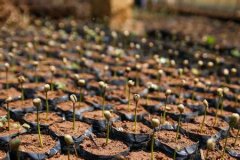
A brief introduction to the history and culture of the origin and development of Ugandan boutique coffee with mild and simple taste
Mbale on the eastern side of Mount Elgon and other producing areas on the western side near the border of the Democratic Republic of the Congo have the export name Wugar. The official ranks are Oaganic (Organic), Bugisu AA, Bugisu A, Bugisu B, Bugisu PB, Wugar, Drugar and other unlisted grades. To find a good Ugandan coffee, you must first recognize BugisuAA and A.

The Cultural course of Coffee beans in Costa Rica
Tarrazu in Costa Rica is one of the major coffee producing areas in the world. The coffee produced is light and pure in flavor and pleasant in aroma. Costa Rica, with its fertile volcanic soil and good drainage, is the first country in Central America to grow coffee and bananas for commercial value. Coffee and bananas are the country's main exports. In 1729, coffee was introduced from Cuba to Goth.

How is Yemeni Coffee? Yemen and Coffee Culture Coffee Culture Spirit
For more information on coffee beans, please follow the coffee workshop (official account cafe_style of Wechat). It is mentioned that Yemen Coffee immediately reminds people of the magical sun-dried beans that taste thick and full, and the fantastic wild aroma of fermented tea in its aftertaste is stacked on layer upon layer, full of mysteries and uncertainties as well as endless longing like the country of Yemen. Since 1536, most of them have been sold to Europe and Turkey.

The Flavor of Fruit Acid beans in African Coffee Culture the present situation of Tanzanian Coffee
Coffee market in Tanzania: coffee exports from Tanzania (Tanzania) play an important role in the entire national economy. In the past, the coffee industry in Tanzania has been dominated by manor cultivation, but now more than 85% are grown by small farmers. Many small farmers form cooperative organizations, the most important of which is the Kilimanjaro Cooperative Alliance (KilimanjaroCoopera)

A brief introduction to the History and Culture of the Origin and Development of Coffee in the Grand Manor in St. Thomas, Blue Mountain, Jamaica
The above differences in export quotas and consumption distribution are extremely embarrassing for the Jamaican government. The asymmetrical Blue Mountain coffee export quota keeps most of the profits in trading enterprises in countries such as Japan, and the Jamaican coffee industry has not benefited from it. The key to the change was in 2005, when the Jamaican Minister of Agriculture made it clear that Blue Mountain Coffee should be roasted more directly in Jamaica.